Fourteen months without a haircut might sound like neglect, but sometimes it’s discipline disguised as patience. When I finally sat in my stylist’s chair today, she was stunned, she said mine was the healthiest hair she’d seen in years and refused to trim off more than the bare minimum. Literally, we had a standoff. I said ‘shorter’. She said ‘no’.
That result didn’t come from expensive serums or salon treatments. It came from doing less, specifically, from washing my hair less often, brushing more mindfully, living more holistically, and letting my scalp restore its natural rhythm.
This simple yet profound shift aligns with what trichologists and dermatologists are rediscovering: that our obsession with “clean” hair often strips away the very oils that keep it strong, shiny, and resilient.
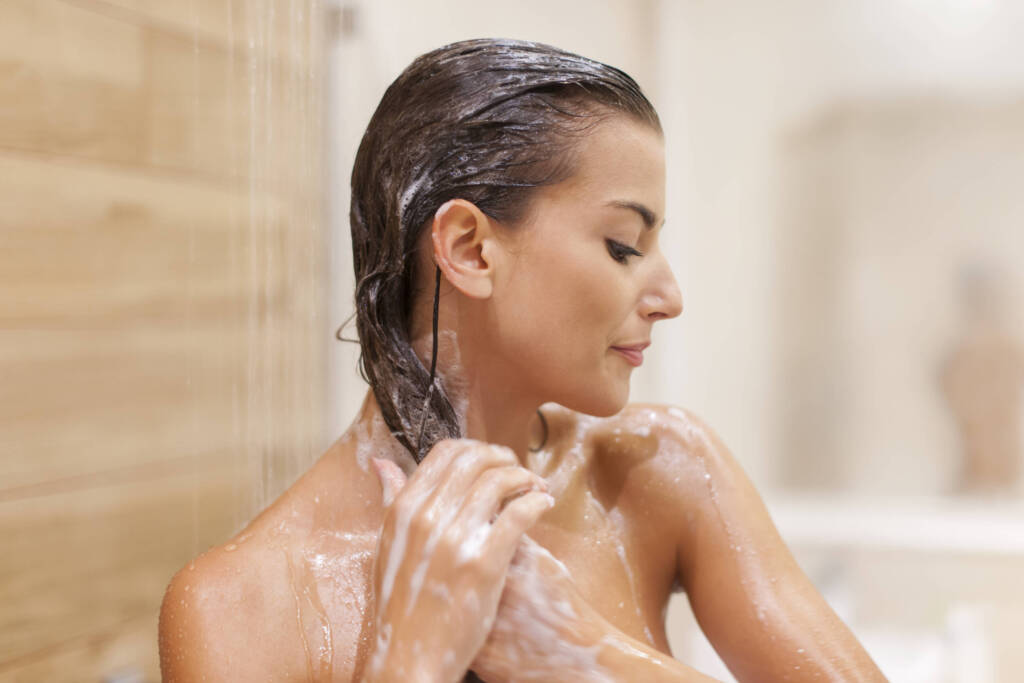
How Often Should You Really Wash Your Hair?
According to the GQ article “How Often Should You Wash Your Hair?” dermatologists generally agree that there’s no universal rule, it depends on your scalp type, hair texture, activity level, and even your local climatehow often should you shampoo your head and scalp. Remember, your scalp is skin and your hair, while ultimately dead, pulls oils up to your scalp.
For example:
- Oily scalps may need washing every 2–3 days.
- Dry or curly hair can thrive with just one wash per week.
- Fine hair tends to collect oil faster and might require slightly more frequent cleansing.
But here’s the kicker: even those who “need” more washing often overdo it, leading to a vicious cycle. Each aggressive shampooing depletes the scalp’s sebum layer, the body’s built-in conditioner, causing dryness and prompting the scalp to produce even more oil.
In effect, the more you wash, the more you need to wash.
A 2022 study in Skin Research and Technology confirmed that excessive washing increases transepidermal water loss (TEWL) from the scalp, disrupting its barrier and microbiome balance (Zhang et al., 2022). When that happens, hair becomes brittle, color fades faster, and breakage accelerates.
Sebum: Nature’s Conditioner and Protector
Sebum — often vilified as “grease” — is actually the foundation of healthy hair. It’s made up of triglycerides, wax esters, and squalene, each contributing to moisture retention and protection against UV and oxidative damage.
Historically, people understood this intuitively. Before synthetic shampoos were invented in the 1930s, most cultures practiced natural cleansing methods: herbal rinses, vinegar or clay washes, and thorough brushing to distribute oils from root to tip. The Victorian practice of “100 brush strokes a night” wasn’t vanity; it was functional trichology.
Modern research backs it up. A 2018 paper in International Journal of Cosmetic Science found that distributing sebum evenly through mechanical brushing enhances hair flexibility and shine while reducing breakage (Lévêque et al., 2018).
What Happens When You Wash Less
When you begin spacing out your washes, say, from daily to twice weekly, your scalp goes through a recalibration period. This “detox” phase can last 2–4 weeks. During that time, you might experience:
- Greasier roots
- Flatter texture
- Itchiness or light flaking
But once the scalp adjusts, oil production normalizes. For many, hair becomes fuller, shinier, and stronger, as though each strand finally remembers its natural state.
In my own 14-month experiment, I shifted to washing once every 7–14 days. Instead of commercial shampoos, I relied on herbal infusions and natural cleansers, rosemary and nettle rinses, clay scalp masks, and an occasional apple cider vinegar blend to clarify. I also drink nettle leaf tea, make my own shampoo bars, and pretty much am as herbalist as you get. I also follow a loose carnivore lifestyle which provides all the nutrients needed.
Over time, the hair at my crown thickened, my ends stopped splitting (which she validated!), and my stylist noticed that even my gray strands appeared smoother and more reflective. This isn’t anecdotal magic; it’s biology functioning as intended.
The Microbiome Connection
Your scalp is alive, not just with hair follicles but with trillions of microorganisms that maintain balance. Frequent shampooing, especially with sulfates, can disrupt this microbiome, increasing inflammation and sensitivity.
A 2020 study published in Frontiers in Cellular and Infection Microbiology showed that a diverse scalp microbiome correlates with reduced dandruff and better overall hair health (Wang et al., 2020). When we wash too often, we disrupt this diversity, allowing pathogenic microbes to dominate.
Letting the scalp’s ecosystem stabilize, through less washing and gentler cleansing, helps maintain microbial harmony. Herbal rinses with antimicrobial yet microbiome-friendly ingredients such as rosemary, sage, chamomile, and calendula support this equilibrium.
Rethinking “Clean”
In Western beauty culture, we’ve conflated “clean” with “stripped.” But true cleanliness, in the biological sense, means balance. Just as we now know that over-sanitizing skin or gut flora causes problems, over-cleansing the scalp weakens it.
Sebum’s lipid matrix not only conditions hair but also shields it from air pollution and UV radiation. A 2021 review in Cosmetics Journal emphasized that lipid removal from the scalp leads to oxidative stress and hair aging (Kwon et al., 2021).
In other words: your hair doesn’t need to be squeaky clean; it needs to be alive.
When to Wash (and When Not To)
Here’s a more nuanced approach:
| Hair Type | Optimal Frequency | Notes |
|---|---|---|
| Fine or oily hair | Every 2–3 days | Use mild, sulfate-free cleanser; rinse with lukewarm water |
| Normal hair | 1–2 times per week | Alternate between shampoo and herbal rinse |
| Curly/coily hair | Every 7–10 days | Focus on hydration; consider co-washing |
| Dry or damaged hair | Every 10–14 days | Rely on natural oils (argan, jojoba, castor) for nourishment |
Environment matters too. If you live in a humid climate or exercise frequently, you can rinse your scalp with water or herbal tea without always using shampoo. The key is to refresh without stripping.
The Role of Brushing and Scalp Massage
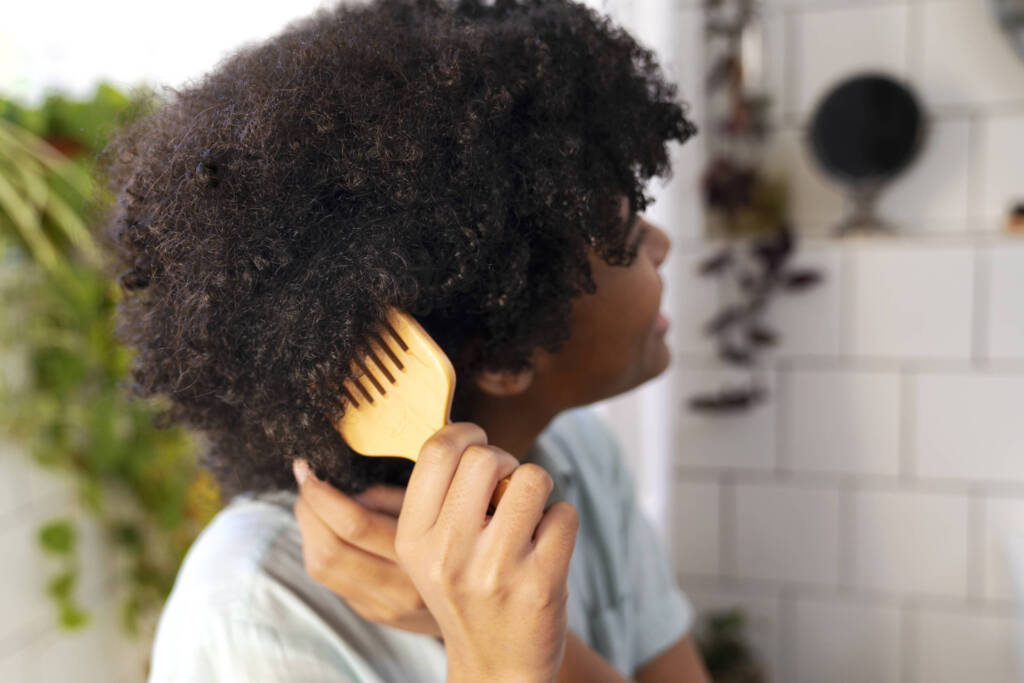
Between washes, brushing is your greatest ally. A boar-bristle brush or wooden comb distributes sebum evenly while exfoliating the scalp and stimulating blood flow.
In my own routine, I brush nightly, slowly, root to tip, then massage the scalp with a few drops of rosemary or peppermint essential oil diluted in jojoba oil. The difference is profound: less shedding, better texture, and a subtle natural sheen that no conditioner can fake.
A 2016 study in Eplasty found that scalp massage increases hair thickness by mechanically stimulating dermal papilla cells, promoting growth (Murata et al., 2016).
This practice not only nourishes hair physically but also triggers relaxation and parasympathetic balance, an old-world ritual with modern-day benefits.
Detoxing from Over-Washing: What to Expect
If you’re ready to reset your scalp’s natural balance, here’s a practical roadmap:
Week 1–2: Transition Phase
- Skip shampoo for 3–4 days longer than usual.
- Use a bristle brush daily.
- Try a diluted apple cider vinegar rinse (1 part vinegar to 5 parts water).
- Sprinkle an herbal dry shampoo and refrain from any scratching.
Week 3–4: Scalp Recalibration
- Your scalp may feel greasy or itchy. Don’t panic, this is normalization.
- Apply clay masks (rhassoul or bentonite) once a week to absorb excess oil.
- Use herbal tonics (rosemary, nettle, burdock) to soothe the scalp.
Week 5+: Maintenance
- Wash every 7–10 days with a mild, natural shampoo or co-wash.
- Alternate with herbal rinses and scalp massages.
- Notice improved volume, moisture retention, and fewer split ends.
Consistency, not perfection, creates results.
The Herbal and Nutritional Support System
Healthy hair doesn’t begin in the shower, it starts within. Sebum quality depends on fatty acid composition, which reflects diet. Essential nutrients for resilient hair include:
- Omega-3s (EPA/DHA) — reduce scalp inflammation (Journal of Cosmetic Dermatology, 2022)
- Zinc and Selenium — balance sebum and prevent flaking
- Silica — strengthens collagen in the follicle sheath (Biological Trace Element Research, 2019)
- Herbs like nettle, horsetail, and rosemary — mineral-rich and circulation-boosting
Herbalists have long known that topical care works best when supported by internal nourishment. A tea made with nettle and horsetail or a supplement combining biotin, zinc, and omega-3s enhances both scalp and hair shaft integrity.
The Minimalist Haircare Philosophy
The modern haircare market pushes products promising instant shine or volume. But the healthiest hair I’ve ever seen, my own included, came from subtraction, not addition.
By letting the body’s natural systems recalibrate, we return to what hair was designed to do: self-regulate, self-protect, and self-renew.
This minimalist approach fits the broader ImmerHealth philosophy: empowering people to trust nature’s design, to see simplicity not as deprivation but as wisdom regained.
Just as we encourage mindful eating, natural movement, and gentle detoxification, mindful hair care restores rhythm to a system long overstimulated by consumer culture.
Conclusion: Trust the Process
If your scalp feels out of balance, oily, flaky, or dull, it’s not rebelling against you. It’s trying to recover equilibrium. Give it space. Replace constant washing with intentional care.
My own 14-month journey is living proof that patience and minimalism can yield extraordinary results. When my stylist told me she refused to cut off my length because it was too healthy to lose, I realized something simple but profound:
Nature always knows how to heal, if we let it.
References
- Zhang, L., et al. (2022). “Impact of Shampoo Frequency on Scalp Barrier Function.” Skin Research and Technology, 28(4).
- Lévêque, J., et al. (2018). “Sebum Distribution and Mechanical Brushing: Effects on Hair Condition.” International Journal of Cosmetic Science, 40(6), 620–628.
- Wang, S., et al. (2020). “The Scalp Microbiome and Its Role in Health and Disease.” Frontiers in Cellular and Infection Microbiology, 10, 607258.
- Kwon, H., et al. (2021). “Lipid Barrier Disruption and Hair Aging: The Role of Sebum.” Cosmetics Journal, 8(4), 101.
- Murata, K., et al. (2016). “Effect of Scalp Massage on Hair Thickness.” Eplasty, 16, e44.
- How Often Should You Wash Your Hair? (2023). GQ Magazine. Retrieved from https://www.gq.com/story/how-often-should-you-wash-hair-1 how often should you shampoo yo….