Resistance training is no longer just about building muscle or lifting heavier weights. It is one of the most reliable ways to support longevity, protect bone density, maintain mobility, and preserve independence as we age.
Strength training has become more mainstream in recent years, with fitness publications like Women’s Health Magazine helping normalize resistance training for everyday people. But what often gets overlooked is how strength training fits into a larger system of movement, nutrition, and hydration.
At ImmerHealth, we view resistance training as one pillar of a much bigger structure. Strength works best when it is supported by classical Pilates, protein-based nutrition, and high-quality water. When those elements are aligned, the body adapts more efficiently and stays resilient over time.
What Is Resistance Training?
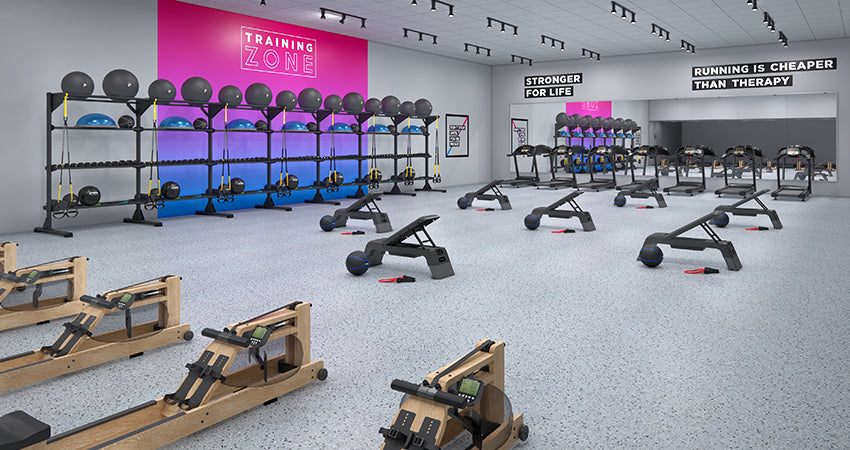
Resistance training is a form of exercise that strengthens muscles by working against an external force such as weights, resistance bands, machines, or body weight. It improves muscle mass, bone density, metabolic health, and functional strength, especially as people age.
What Are the Benefits of Resistance Training?
Resistance training provides long-term health benefits that extend far beyond appearance, including:
- Increased muscle strength and lean mass
- Improved bone density and joint support
- Better blood sugar regulation
- Reduced risk of falls and injury
- Support for cognitive and cardiovascular health
These benefits become increasingly important after age 30, when muscle loss and metabolic changes begin to accelerate if strength training is not present.
Why Classical Pilates Improves Strength Training Results
Classical Pilates supports strength training by improving posture, joint alignment, core stability, and movement control. This allows the body to handle resistance training more safely while reducing compensation patterns that lead to injury or chronic pain.
Pilates emphasizes spinal articulation, breath coordination, and deep core engagement. These qualities directly improve lifting mechanics and support classical Pilates for joint stability and long-term movement quality.
When Pilates is practiced alongside resistance training, the body develops stronger stabilizing muscles, better coordination, and more efficient force transfer. Strength built on control lasts longer and feels better.


4
Is Pilates Enough Without Weight Training?
Pilates improves movement quality, posture, and stability, but it does not provide sufficient progressive overload to maintain muscle mass on its own. Resistance training is necessary to preserve strength, bone density, and metabolic health, especially as we age.
The most effective approach combines Pilates-based strength training with traditional resistance exercises.
Weight Lifting and Pilates Are Friends
Weight lifting builds muscular capacity. Pilates refines how that capacity is used.
Together, they support functional strength training that translates to real life tasks like lifting, carrying, stabilizing, and rotating. This combination helps prevent injury and supports strength training for longevity rather than short-term performance.
Joseph Pilates, the genius behind the Pilates method, studied everything from Roman and Greek warrior training to yoga, rowing, swimming, and Buddhism. He was a boxing instructor before moving to New York City.
How Much Protein Do You Need for Strength Training?
Protein intake for muscle recovery is essential when resistance training is part of your routine. Strength training increases the body’s demand for amino acids that repair muscle tissue and support lean mass.
Research shows that protein needs increase with age, particularly when resistance training is used to prevent muscle loss. Including whole food protein sources at each meal supports muscle repair, hormone production, and metabolic stability.
Without adequate protein, strength training adaptations slow regardless of effort.
Some people (like me) go all-in on protein and adopt the Carnivore Lifestyle. Check out ImmerHealth’s book on this topic here!
Why Hydration Matters for Muscle Recovery
Hydration and muscle recovery are deeply connected. Muscle tissue, fascia, and joints rely on adequate hydration to function properly.
Even mild dehydration can reduce strength, endurance, and coordination. Water quality and cellular hydration influence how effectively nutrients are delivered and waste products are removed during recovery.
This is why simply drinking more water is not always enough. Mineral balance and water quality play a role in how the body actually uses the water it consumes. Here is the hydrogen water machine that many pro athletes (think Tom Brady, Manny Pasquaio, Tiger Woods, and Sylvester Stallone) use.
What Is Functional Strength Training?
Functional strength training focuses on movements that support daily life, including lifting, carrying, twisting, and stabilizing. It prioritizes joint integrity, coordination, and long-term resilience over isolated muscle fatigue.
When resistance training is combined with Pilates, protein-based nutrition, and proper hydration, it supports functional fitness for aging adults and long-term independence.
Building a Sustainable Strength Training System
You do not need extreme workouts to benefit from resistance training. A sustainable system includes:
- Two to three resistance training sessions per week
- One to two classical Pilates sessions focused on alignment and control
- Protein included at every meal
- Daily hydration with attention to water quality
This approach supports recovery, consistency, and long-term progress without burnout.
Strength Training Without Burnout
Strength training should support your life, not drain it.
When movement quality, nutrition, and hydration are aligned, resistance training becomes energizing rather than exhausting. Injuries decrease, recovery improves, and progress becomes more consistent.
At ImmerHealth, we believe strength is a long-term investment. The goal is not just to lift more weight, but to move well, recover fully, and build resilience that lasts for decades.
Book a session with ImmerHealth's resident 3rd Generation Classical Pilates coach, Erica!
References
American College of Sports Medicine. Resistance training for health and longevity.
https://www.acsm.org
Phillips SM, Van Loon LJC. Dietary protein for athletes and active adults. Journal of Sports Sciences.
https://doi.org/10.1080/02640414.2011.619204
Fragala MS et al. Resistance training for older adults. Journal of Strength and Conditioning Research.
https://journals.lww.com/nsca-jscr
Cruz-Jentoft AJ et al. Sarcopenia and protein intake. Age and Ageing.
https://doi.org/10.1093/ageing/afw123
Popkin BM et al. Water, hydration, and health. Nutrition Reviews.
https://academic.oup.com/nutritionreviews
Women’s Health Magazine. Guide to resistance training according to trainers.
https://www.womenshealthmag.com/fitness/a70276914/guide-to-resistance-training-according-to-trainers/