


There is a very specific moment each spring, right after the last frost, that most of us rush through, excited for summer.
That is when gardeners move.
If you have even a small patch of yard, this is the season to stop admiring other people’s gardens and start building your own edible one. Not because it is trendy. Not because it looks charming on social media. But because it changes how you live.
Growing your own food strengthens your body, sharpens your mind, lowers stress, improves your nutrition, and builds a kind of quiet independence that modern life has almost erased.
And once you taste a tomato picked warm from your own yard, there is no going back.
This Is About More Than Vegetables
People think an edible garden is about food. It is, but that is only part of it.
Multiple studies show that people who garden consistently eat more fruits and vegetables than those who do not. Research published in Public Health Nutrition found that home gardeners are significantly more likely to meet recommended produce intake levels (Alaimo et al., 2008). Another study in Nutrients linked gardening with higher fiber intake and overall better diet quality (Litt et al., 2017).
But the deeper shift is psychological.
Gardening lowers stress. A study in the Journal of Health Psychology found that gardening reduced cortisol levels more effectively than indoor leisure activities like reading (Van Den Berg & Custers, 2011). Soil exposure itself may influence serotonin pathways through beneficial microbes, according to research in Neuroscience (Lowry et al., 2007).
Translation: when you garden, you calm your nervous system.
And in a culture that runs on speed and stimulation, that alone is reason enough.
The Independence Factor No One Talks About
There is something grounding about stepping outside and picking dinner.
Food prices fluctuate. Supply chains tighten. Labels get longer and harder to interpret. When you grow even part of your own food, you step out of that constant dependence.
The USDA reports that millions of households experience food insecurity each year (USDA ERS, 2023). A backyard garden will not fix national policy, but it absolutely strengthens your household. Even a modest garden can produce hundreds of dollars’ worth of fresh produce per season.
More importantly, home harvested produce is picked at peak ripeness. Commercial produce is often harvested early for transport. Research in the Journal of the Science of Food and Agriculture shows that harvesting practices affect phytonutrient levels and antioxidant content (Brandt et al., 2011).
Fresh matters. Timing matters. Growing your own gives you both.
Plan Now. Move After the Last Frost.
If you want this to work, timing is everything.
Planting too early leads to cold stressed seedlings that stall for weeks. Warm season crops like tomatoes, peppers, squash, and cucumbers need soil that has genuinely warmed.
Research in Scientia Horticulturae confirms that transplanting into properly warmed soil improves growth rates and yield outcomes (Li et al., 2021).
So here is the practical move:
Use the weeks before your last frost to prepare. Design the space. Improve the soil. Install fencing. Gather materials.
Then, once the frost risk passes, plant with confidence instead of scrambling.
Protect What You Plant
If you have ever watched deer, rabbits, or groundhogs move through a neighborhood, you already know this truth: if you grow it, something will try to eat it.
Fencing is not decorative fluff. It is insurance.
Penn State Extension identifies physical barriers as one of the most effective and humane methods for preventing wildlife damage in home gardens (Penn State Extension, 2022).
You do not need fortress walls. You need thoughtful structure. Wire fencing, wood panels, even strategically planted hedges can define your edible space and protect it.
An edible garden deserves boundaries.
Soil Is Not Dirt
If there is one place you do not cut corners, it is soil.
Healthy soil holds water better, retains nutrients, and supports microbial life that directly influences plant health. The USDA Natural Resources Conservation Service emphasizes that increasing soil organic matter improves both water retention and nutrient cycling (USDA NRCS, 2020).
This is where preparation matters.
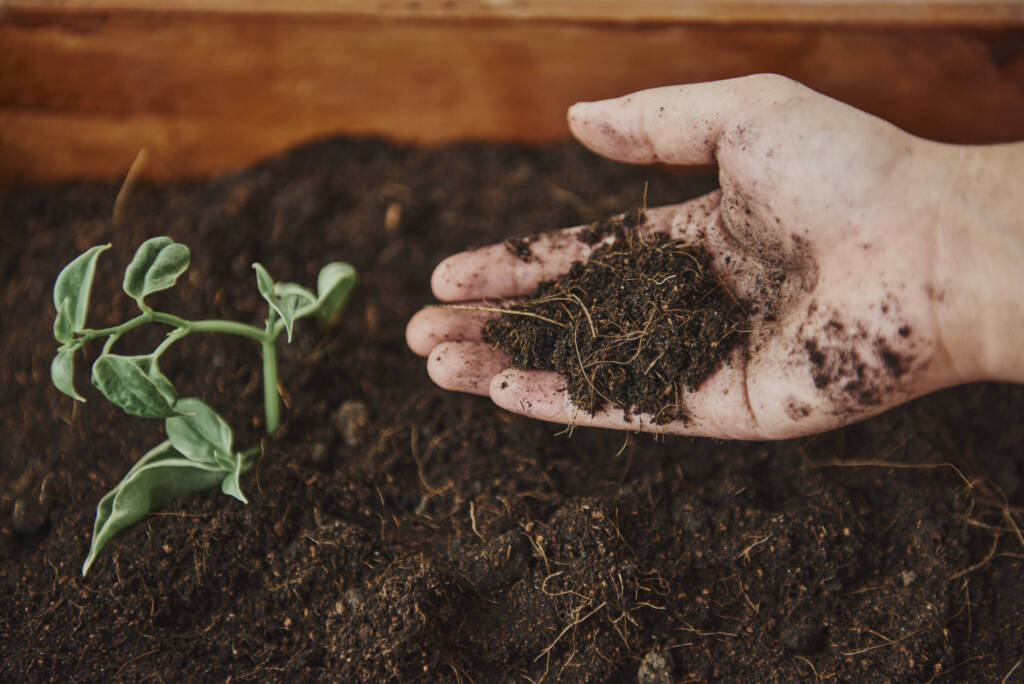
Before planting, enrich your beds with compost, mineral balanced amendments, and organic matter. If you have been saving kitchen scraps and composting them properly, you are ahead of most people. Organic material added in late winter breaks down just in time to feed spring growth.
Strong soil means strong plants. Weak soil guarantees frustration.
Edible Landscaping Can Be Beautiful
One of the biggest hesitations people have is aesthetic. They imagine rows of crops that look out of place in a residential yard.
That is outdated thinking.
You can weave food into your existing landscape. Blueberries can replace ornamental shrubs. Kale and Swiss chard can anchor flower beds with deep green and purple leaves. Rosemary and thyme can edge walkways. Climbing beans can soften fences.
Research in Urban Forestry & Urban Greening shows that integrated food producing landscapes increase biodiversity and pollinator activity while maintaining visual appeal (Lovell, 2010).
You do not have to choose between beauty and productivity. You can design both.
Check out ImmerHealth’s Practical Edible Landscaping book on Amazon!
The Health Return Is Immediate
Freshly harvested greens contain more vitamin C and antioxidants than produce stored for several days after harvest, according to research in Postharvest Biology and Technology (Lee & Kader, 2000).
Growing your own also reduces pesticide exposure. The Environmental Working Group consistently documents pesticide residues on conventionally grown produce (EWG, 2023).
Then there is the movement itself. Gardening qualifies as moderate intensity physical activity according to the Centers for Disease Control and Prevention (CDC, 2022). Digging, planting, weeding, carrying compost, and harvesting all contribute to strength, mobility, and cardiovascular health.
You are not just feeding your body. You are using it.
What to Plant First
Keep it simple in year one. You want early wins.
After the last frost, focus on high return crops:
- Tomatoes
- Peppers
- Zucchini
- Cucumbers
- Green beans
- Basil
- Lettuce
- Kale
These plants grow reliably and produce generously. Success builds momentum.
As you grow more confident, add perennial crops like asparagus, blueberries, or fruit trees. Research in Agroecology and Sustainable Food Systems suggests that diversified food landscapes increase resilience and reduce long term input needs (Altieri et al., 2015).
The earlier you plant perennials, the sooner they start paying you back.
The Real Reason to Start
There is something deeply stabilizing about walking outside and gathering food from your own yard.
It shifts your relationship with time. It slows you down. It reminds you that growth takes patience and consistency.
A study in Landscape and Urban Planning found that people engaged in gardening reported higher life satisfaction and stronger sense of purpose (Soga et al., 2017).
That is not accidental. When you grow food, you participate in something foundational. You see tangible results from steady effort. You reclaim competence.
In a world that often feels disconnected from the basics, that matters.
Make This the Season You Act
You do not need perfection. You need a defined space, improved soil, simple fencing, and a clear plan.
Prepare now. Let the last frost pass. Then plant decisively.
By mid summer, you will not just have vegetables. You will have proof that you can feed yourself, improve your health, and reshape your environment.
And once you start, you will wonder why you waited.
Ready to Design It Properly?
If you want to move beyond a few scattered plants and truly integrate food into your landscape in a way that is both productive and beautiful, you need a framework.
Practical Edible Landscaping: How to Foodscape for a Healthier You walks you through designing a yard that feeds you without sacrificing structure or aesthetics. It covers layout, soil building, plant layering, seasonal timing, and long term planning.
You can find it on Amazon here:
Do not let another season pass with good intentions.
Prepare now. Plant after the last frost. Build something that nourishes you for years to come.
References
Alaimo, K., et al. (2008). Fruit and vegetable intake among urban community gardeners. Public Health Nutrition.
Altieri, M. A., et al. (2015). Agroecology and sustainable food systems. Agroecology and Sustainable Food Systems.
Brandt, K., et al. (2011). Agroecosystem management and nutritional quality of plant foods. Journal of the Science of Food and Agriculture.
CDC (2022). Physical Activity Basics.
EWG (2023). Shopper’s Guide to Pesticides in Produce.
Lee, S. K., & Kader, A. A. (2000). Preharvest and postharvest factors influencing vitamin C. Postharvest Biology and Technology.
Li, X., et al. (2021). Effects of transplant timing on vegetable crops. Scientia Horticulturae.
Lovell, S. T. (2010). Multifunctional urban agriculture. Urban Forestry & Urban Greening.
Lowry, C. A., et al. (2007). Immune responsive serotonergic system. Neuroscience.
Penn State Extension (2022). Managing Wildlife Damage in the Home Garden.
Soga, M., et al. (2017). Health benefits of urban allotment gardening. Landscape and Urban Planning.
USDA ERS (2023). Food Security in the United States.
USDA NRCS (2020). Soil Health Technical Note.


